
Structure de pions
| ♔ Blancs | ♚ Noirs | |
| Pions doublés | — | — |
| Pions isolés | — | — |
| Arriérés | — | — |
| Chaînes | ● f2→g3, h2→g3 | ● e6→d5, a7→b6, c7→b6, f7→e6 |
| Passés | — | — |
| Majorité | — | — |
Cases
| ♔ Blancs | ♚ Noirs | |
| Cases fortes | ● f4 (2v0), ● b5 (2v0), ● e5 (2v0) | — |
| Cases faibles | — | ● g5 |
| Centre | ● d4 (1v0), ● e5 (2v0) | ● d5 (3v2) |
Colonnes et diagonales
| ♔ Blancs | ♚ Noirs |
Pièces
| ♔ Blancs | ♚ Noirs | |
| Bd2 | ● Bd2 Actif (mob. 6) | |
| Bg2 | ● Bg2 Ok (mob. 2) | |
| Bb7 | ● Bb7 Ok (mob. 3) | |
| Be7 | ● Be7 Actif (mob. 7) | |
| Paire de fous | ● Oui | ● Oui |
| Non développées | 1 (● a1) | 2 (● b8, ● a8) |
Sécurité du roi
| ♔ Blancs | ♚ Noirs | |
| Statut | ● Roqué | ● Roqué |
| Droits de roque | — | — |
Thèmes
| ♔ Blancs | ♚ Noirs | |
| Phase | Ouverture | |
| Centre | fermé | |
| Ruptures | ● c4-c5 | ● …e6-e5 |
E18n — Queen’s Indian
1.d4 Nf6 2.c4 e6 3.Nf3 b6 4.g3 Bb7 5.Bg2 Be7 6.O-O O-O 7.Nc3 Ne4 8.Bd2 d5 ○ Trait aux Blancs
Ouverture — Centre fermé
♔ Point de vue Blancs
8
7
6
5
4
3
2
1


abcdefgh
Plan principal. Jeu au centre (rupture c4-c5).
Atouts. Les Blancs s'appuient sur un contrôle dominant de f4, b5 et e5 et un fou actif en d2.
Plans. cxd5 (Capture en d5, Occuper le centre — 80 % des parties) ; Ne5 (Cavalier centralisé en e5 — 12 % des parties) ; Qc2 (5 % des parties).
Atouts. Les Blancs s'appuient sur un contrôle dominant de f4, b5 et e5 et un fou actif en d2.
Plans. cxd5 (Capture en d5, Occuper le centre — 80 % des parties) ; Ne5 (Cavalier centralisé en e5 — 12 % des parties) ; Qc2 (5 % des parties).
♚ Point de vue Noirs
1
2
3
4
5
6
7
8
hgfedcba
Plan principal. Jeu au centre (rupture e6-e5).
Atouts. Les Noirs s'appuient sur un fou actif en e7.
Côté adverse. Une pièce en prise (le pion en c4).
En contrepartie. Plusieurs pièces dorment encore (le cavalier b8 et la tour a8).
Plans. ...Nd7 (Développer b8 — 10 % des parties) ; ...Nxc3 (Menace d1 — 9 % des parties) ; ...Nxd2 (Menace f1 — 6 % des parties).
Atouts. Les Noirs s'appuient sur un fou actif en e7.
Côté adverse. Une pièce en prise (le pion en c4).
En contrepartie. Plusieurs pièces dorment encore (le cavalier b8 et la tour a8).
Plans. ...Nd7 (Développer b8 — 10 % des parties) ; ...Nxc3 (Menace d1 — 9 % des parties) ; ...Nxd2 (Menace f1 — 6 % des parties).
Avantages
Faiblesses
Diagonale active
Plans
| Partie |
|---|
| 1941 Trencianske Teplice – Round 6 – Opocensky, Karel – 0-1 – Saemisch, Friedrich – G22 1. c4 Nf6 2. d4 e6 3. Nf3 b6 4. g3 Bb7 5. Bg2 Be7 6. O-O O-O 7. Nc3 Ne4 8. Bd2 d5 9. Qc2 Nxd2 10. Nxd2 c6 |
| 1941 Trencianske Teplice – Round 7 – Füster, Géza – 0-1 – Potucek, Ludovit – G27 1. d4 Nf6 2. c4 e6 3. Nf3 b6 4. g3 Bb7 5. Bg2 Be7 6. Nc3 O-O 7. O-O Ne4 8. Bd2 d5 9. Qc2 Nd7 10. Rfd1 Nxd2 |
| 1948 Karlovy Vary – Round 15 – Opocensky, Karel – 1/2-1/2 – Pirc, Vasja – G144 1. d4 Nf6 2. c4 e6 3. Nf3 b6 4. g3 Bb7 5. Bg2 Be7 6. Nc3 O-O 7. O-O Ne4 8. Bd2 d5 9. Rc1 Nc6 10. cxd5 exd5 |
| 1960 HUN Ch playoff – Round 4 – Portisch, Lajos – 1-0 – Szabo, Laszlo – G3 1. d4 Nf6 2. c4 e6 3. Nf3 b6 4. g3 Bb7 5. Bg2 Be7 6. O-O O-O 7. Nc3 Ne4 8. Bd2 d5 9. Ne5 Nxd2 10. Qxd2 c6 |
| 1960 Leipzig olm fin-A – Round 7 – Portisch, Lajos – 1-0 – Eliskases, Erich – G122 1. d4 Nf6 2. c4 e6 3. Nf3 b6 4. g3 Bb7 5. Bg2 Be7 6. O-O O-O 7. Nc3 Ne4 8. Bd2 d5 9. Ne5 Nxc3 10. Bxc3 Nd7 |
| 1966 Tbilisi ch-URS – Round 4 – Korchnoi, Viktor – 1/2-1/2 – Kholmov, Ratmir D – G30 1. d4 Nf6 2. c4 e6 3. Nf3 b6 4. g3 Bb7 5. Bg2 Be7 6. O-O O-O 7. Nc3 Ne4 8. Bd2 d5 9. Ne5 Nd7 10. Nxe4 dxe4 |
| 1967 Harrachov – Round 1 – Gulko, Boris – 1/2-1/2 – Schoeneberg, Manfred – G23 1. d4 Nf6 2. c4 e6 3. Nf3 b6 4. g3 Bb7 5. Bg2 Be7 6. Nc3 O-O 7. O-O Ne4 8. Bd2 d5 9. Ne5 Nd7 10. cxd5 exd5 |
| 1969 URS Team Ch Grozny – Round 1 – Antoshin, Vladimir S – 1/2-1/2 – Furman, Slavomir – G4 1. d4 Nf6 2. c4 e6 3. Nf3 b6 4. g3 Bb7 5. Bg2 Be7 6. O-O O-O 7. Nc3 Ne4 8. Bd2 d5 9. Ne5 Nxc3 10. Bxc3 Nd7 |
| 36. Olympiad 2004 – Round 7 – Fridman, Daniel – 1/2-1/2 – Korchnoi, Viktor – G234 1. d4 Nf6 2. c4 e6 3. Nf3 b6 4. g3 Bb7 5. Bg2 Be7 6. O-O O-O 7. Nc3 Ne4 8. Bd2 d5 9. Ne5 Nxc3 10. Bxc3 Nd7 |
| Tallinn 1973 – Round 1 – Andersson, Ulf 1949 – 1/2-1/2 – Polugaevsky, Lev – G7 1. c4 Nf6 2. Nc3 e6 3. Nf3 b6 4. g3 Bb7 5. Bg2 Be7 6. O-O O-O 7. d4 Ne4 8. Bd2 d5 9. Ne5 Nd7 10. Bf4 Nxe5 |
-

- E12-E19 1. d4 Nf6 2. c4 e6 3. Nf3 b6 Queen's Indian defence, E18 - 1.d4 Nf6 2.c4 e6 3.Nf3 b6 4.g3 Bb7 5.Bg2 Be7 6.O-O O-O 7.Nc3 - Queen's Indian Defense: Classical Variation, Traditional Variation, E18n - 9.* - Queen’s Indian, SÉRIE E
1941 Trencianske Teplice – Round 6 – Opocensky, Karel – 0-1 – Saemisch, Friedrich – G22
-
- Lire la suite
-

- E12-E19 1. d4 Nf6 2. c4 e6 3. Nf3 b6 Queen's Indian defence, E18 - 1.d4 Nf6 2.c4 e6 3.Nf3 b6 4.g3 Bb7 5.Bg2 Be7 6.O-O O-O 7.Nc3 - Queen's Indian Defense: Classical Variation, Traditional Variation, E18n - 9.* - Queen’s Indian, SÉRIE E
1941 Trencianske Teplice – Round 7 – Füster, Géza – 0-1 – Potucek, Ludovit – G27
-
- Lire la suite
-

- E12-E19 1. d4 Nf6 2. c4 e6 3. Nf3 b6 Queen's Indian defence, E18 - 1.d4 Nf6 2.c4 e6 3.Nf3 b6 4.g3 Bb7 5.Bg2 Be7 6.O-O O-O 7.Nc3 - Queen's Indian Defense: Classical Variation, Traditional Variation, E18n - 9.* - Queen’s Indian, SÉRIE E
1948 Karlovy Vary – Round 15 – Opocensky, Karel – 1/2-1/2 – Pirc, Vasja – G144
-
- Lire la suite
-

- E12-E19 1. d4 Nf6 2. c4 e6 3. Nf3 b6 Queen's Indian defence, E18 - 1.d4 Nf6 2.c4 e6 3.Nf3 b6 4.g3 Bb7 5.Bg2 Be7 6.O-O O-O 7.Nc3 - Queen's Indian Defense: Classical Variation, Traditional Variation, E18n - 9.* - Queen’s Indian, SÉRIE E
1960 HUN Ch playoff – Round 4 – Portisch, Lajos – 1-0 – Szabo, Laszlo – G3
-
- Lire la suite
-

- E12-E19 1. d4 Nf6 2. c4 e6 3. Nf3 b6 Queen's Indian defence, E18 - 1.d4 Nf6 2.c4 e6 3.Nf3 b6 4.g3 Bb7 5.Bg2 Be7 6.O-O O-O 7.Nc3 - Queen's Indian Defense: Classical Variation, Traditional Variation, E18n - 9.* - Queen’s Indian, SÉRIE E
1960 Leipzig olm fin-A – Round 7 – Portisch, Lajos – 1-0 – Eliskases, Erich – G122
-
- Lire la suite
-
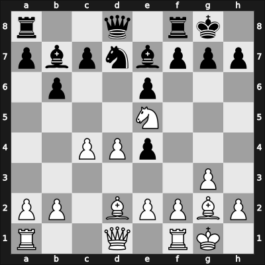
- E12-E19 1. d4 Nf6 2. c4 e6 3. Nf3 b6 Queen's Indian defence, E18 - 1.d4 Nf6 2.c4 e6 3.Nf3 b6 4.g3 Bb7 5.Bg2 Be7 6.O-O O-O 7.Nc3 - Queen's Indian Defense: Classical Variation, Traditional Variation, E18n - 9.* - Queen’s Indian, SÉRIE E
1966 Tbilisi ch-URS – Round 4 – Korchnoi, Viktor – 1/2-1/2 – Kholmov, Ratmir D – G30
-
- Lire la suite
-

- E12-E19 1. d4 Nf6 2. c4 e6 3. Nf3 b6 Queen's Indian defence, E18 - 1.d4 Nf6 2.c4 e6 3.Nf3 b6 4.g3 Bb7 5.Bg2 Be7 6.O-O O-O 7.Nc3 - Queen's Indian Defense: Classical Variation, Traditional Variation, E18n - 9.* - Queen’s Indian, SÉRIE E
1967 Harrachov – Round 1 – Gulko, Boris – 1/2-1/2 – Schoeneberg, Manfred – G23
-
- Lire la suite
-
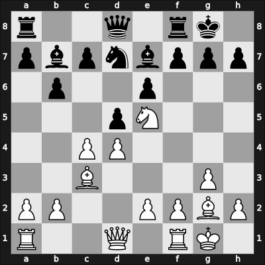
- E12-E19 1. d4 Nf6 2. c4 e6 3. Nf3 b6 Queen's Indian defence, E18 - 1.d4 Nf6 2.c4 e6 3.Nf3 b6 4.g3 Bb7 5.Bg2 Be7 6.O-O O-O 7.Nc3 - Queen's Indian Defense: Classical Variation, Traditional Variation, E18n - 9.* - Queen’s Indian, SÉRIE E
1969 URS Team Ch Grozny – Round 1 – Antoshin, Vladimir S – 1/2-1/2 – Furman, Slavomir – G4
-
- Lire la suite
-
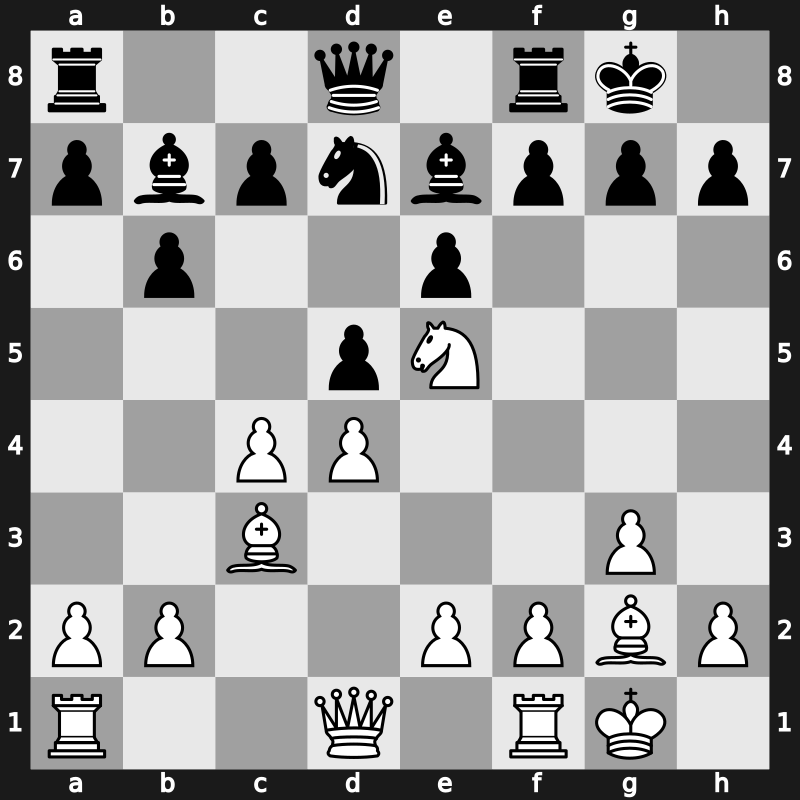
- E12-E19 1. d4 Nf6 2. c4 e6 3. Nf3 b6 Queen's Indian defence, E18 - 1.d4 Nf6 2.c4 e6 3.Nf3 b6 4.g3 Bb7 5.Bg2 Be7 6.O-O O-O 7.Nc3 - Queen's Indian Defense: Classical Variation, Traditional Variation, E18n - 9.* - Queen’s Indian, SÉRIE E
36. Olympiad 2004 – Round 7 – Fridman, Daniel – 1/2-1/2 – Korchnoi, Viktor – G234
-
- Lire la suite
-
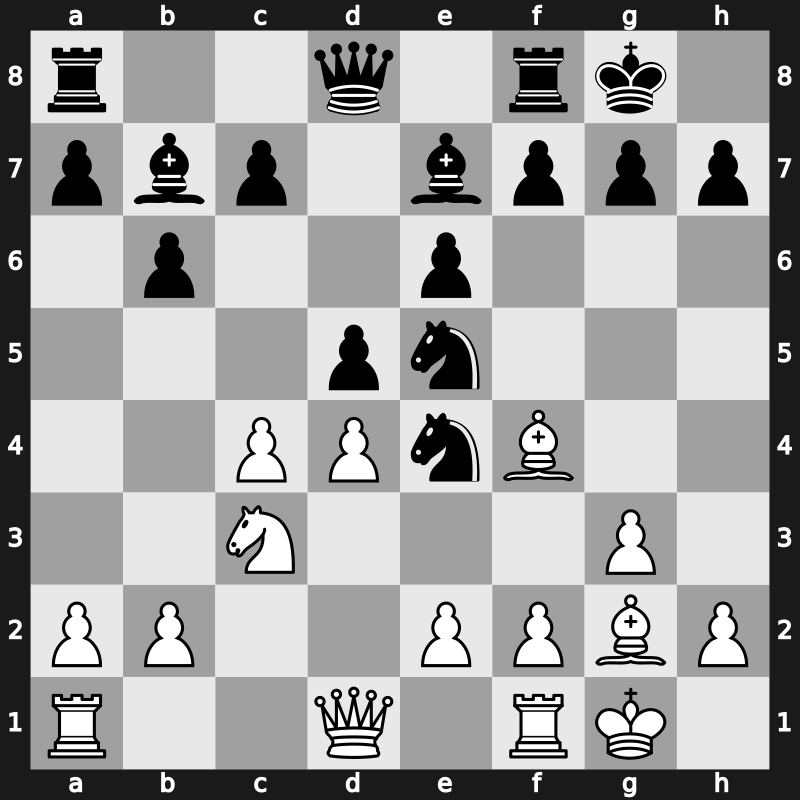
- E12-E19 1. d4 Nf6 2. c4 e6 3. Nf3 b6 Queen's Indian defence, E18 - 1.d4 Nf6 2.c4 e6 3.Nf3 b6 4.g3 Bb7 5.Bg2 Be7 6.O-O O-O 7.Nc3 - Queen's Indian Defense: Classical Variation, Traditional Variation, E18n - 9.* - Queen’s Indian, SÉRIE E
Tallinn 1973 – Round 1 – Andersson, Ulf 1949 – 1/2-1/2 – Polugaevsky, Lev – G7
-
- Lire la suite